About the Buckeye Main Street Coalition
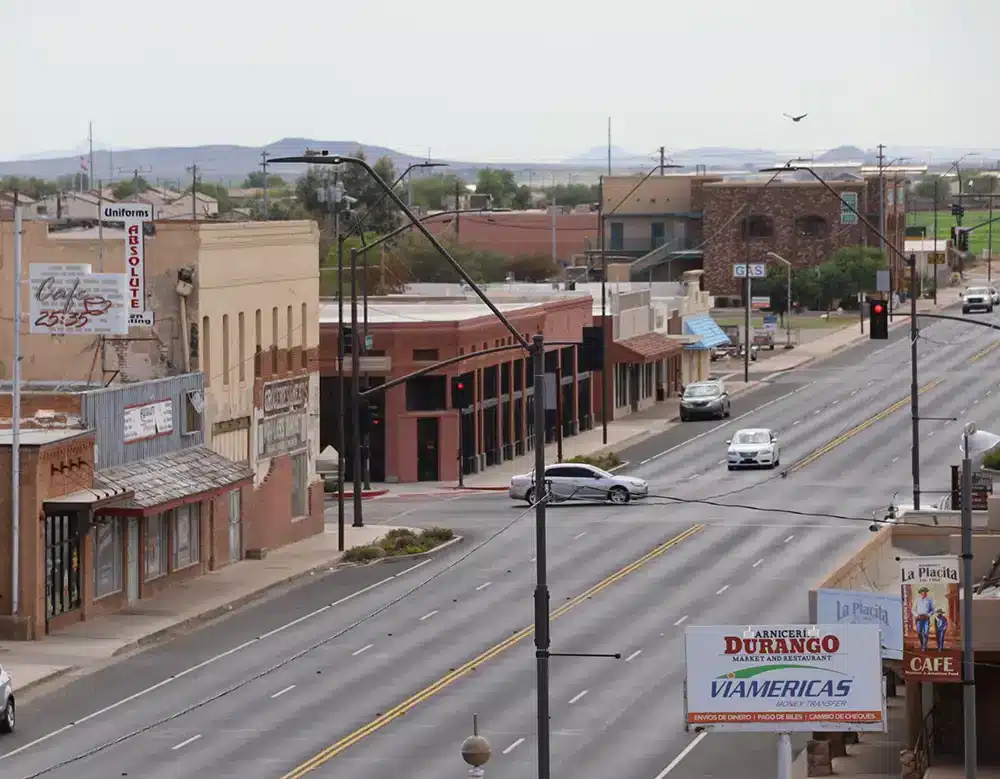
The Buckeye Main Street Coalition began in 1986. Main Street is an important part of a larger effort to enhance and preserve downtown Buckeye. The Town of Buckeye designates a percentage of the Town's transaction privilege tax to be used for revitalization purposes. Main Street is responsible for finding effective uses for those funds, and to make formal requests to the Town Council. Some of the items that we provide as a service to help revitalize the downtown area are:
- Historical Preservation
- Grant Funding
- Professional Architectural Designs
- Renovation Assistance
- Design Assistance
- Events
Buckeye Valley History
In 1877, the founder of the settlement that was to become the Town of Buckeye led a party of six men, three women, and ten children from Creston, Iowa, bound for Arizona. The leader of this party was Thomas Newt Clanton whose purpose for coming west was to retain his health. It was a good move for him; he lived in Arizona for 49 years before his death at the age of 82.
Development in the Buckeye Valley received its first great boost with the construction of the Buckeye Canal. In 1884, Malin M. Jackson named the canal in honor of his native state of Ohio, the Buckeye State. Clanton built ten miles of the canal, which was completed in 1886.
In 1887, Clanton and his family moved to Buckeye, becoming the first permanent Anglo residents. Clanton and Jackson envisioned a need for a town site near the center of the Buckeye Valley. In 1888, the two, along with William (Bucky) O'Neil, who was later to become known as a famous Rough Rider, laid out the town site on a portion of the Clanton homestead.
The first post office in the area was established the same year, with the postal station called Buckeye. Also in 1888, Bucky O'Neil and Associates organized the Buckeye Irrigation Company and had it certified by the Territorial Secretary. Jackson named the town Sidney, after his home in Ohio. However, because of the significance of the canal, over time the town became known as Buckeye, and the name was legally changed in 1910.
Advances in transportation put Buckeye on the map. In 1910, the Arizona Eastern Railroad came to Buckeye; in 1911, the first car; by 1912, a steam rail line connected with Phoenix; and by 1915, a state highway. The coming of the railroad was so significant that the business district was moved to accommodate the location of the railroad station.
As a result, Buckeye was booming. By 1912, major buildings were constructed, along with expansion of the business community. Buckeye was incorporated in 1926 and included 440 acres. The first mayor was Hugh M. Watson, who started the Buckeye Valley Bank. His son, Hugh Watson, Jr., served as mayor from 1956 to 1958.
In 1935, the Buckeye Chamber of Commerce started the Helzapoppin Days, which has become a local tradition. The festivities included street dances, a parade, a carnival and a rodeo. Proceeds were given to local churches that distributed the funds to the needy, and for scholarships. Celebrities such as cowboy singing star Gene Autry attended the events. Similar local holidays, such as the annual Pioneer Days, are still celebrated in Buckeye today.
(information provided courtesy of the Buckeye Valley Chamber of Commerce.)
What is Main Street?
The National Trust for Historic Preservation launched the Main Street Program in 1977 in response to the rapid deterioration of many of America's downtowns following WWII. The increasing popularity of suburb development threatened the commercial architecture in downtown as businesses followed the residents to outlying areas of town. The Main Street Program emerged as a comprehensive revitalization strategy to encourage economic development through historic preservation. The downtown business district would once again be the heart and soul of its city, the center of social, cultural and commercial activity.
How does it work?
Main Street calls for a four point approach to downtown revitalization. It is a community-driven effort to preserve and revitalize the downtown with volunteers coordinating activities in each of the following areas.
Organization
The Buckeye Main Street Coalition is led by a volunteer Board of Directors and staffed by the Town of Buckeye. Volunteers participate on each of the standing committees to accomplish goals of the organization. Membership is open to anyone interested in the downtown revitalization efforts.
Promotion
Recreating downtown Buckeye as a vibrant place to live, work and play is a vital part of the program. Promoting downtown as a destination for visitors and residents will boost retail sales and encourage continued growth. Special events create more foot traffic in downtown making it a more attractive location for prospective new business.
Design
The historic building fabric of downtown Buckeye is in desperate need of preservation. With so few original buildings remaining, Main Street seeks to encourage rehabilitation of these historic structures which are an important part of preserving the heritage of the community and contribute to its unique charm. Main Street will assist business and property owners with design ideas for exterior facade renovations and solutions for common maintenance problems associated with older buildings. Creating an overall plan and design for the new construction and redevelopment of downtown will also provide continuity and functionality, as growth is imminent in the region.
Economic Restructuring
Business retention and business recruitment are essential components of a solid economic development program for downtown Buckeye. Main Street can be a flourishing marketplace with a healthy mix of retail, service and governmental entities in place. Providing small business owners with resources and information on grants and tax incentives and other beneficial programs is another way Main Street assists and strengthens local businesses.
Who can participate?
Anyone with an interest in the revitalization of downtown can participate. For more information or to volunteer, please contact the Executive Director.